What Is Inflation and Why Does It Happen?
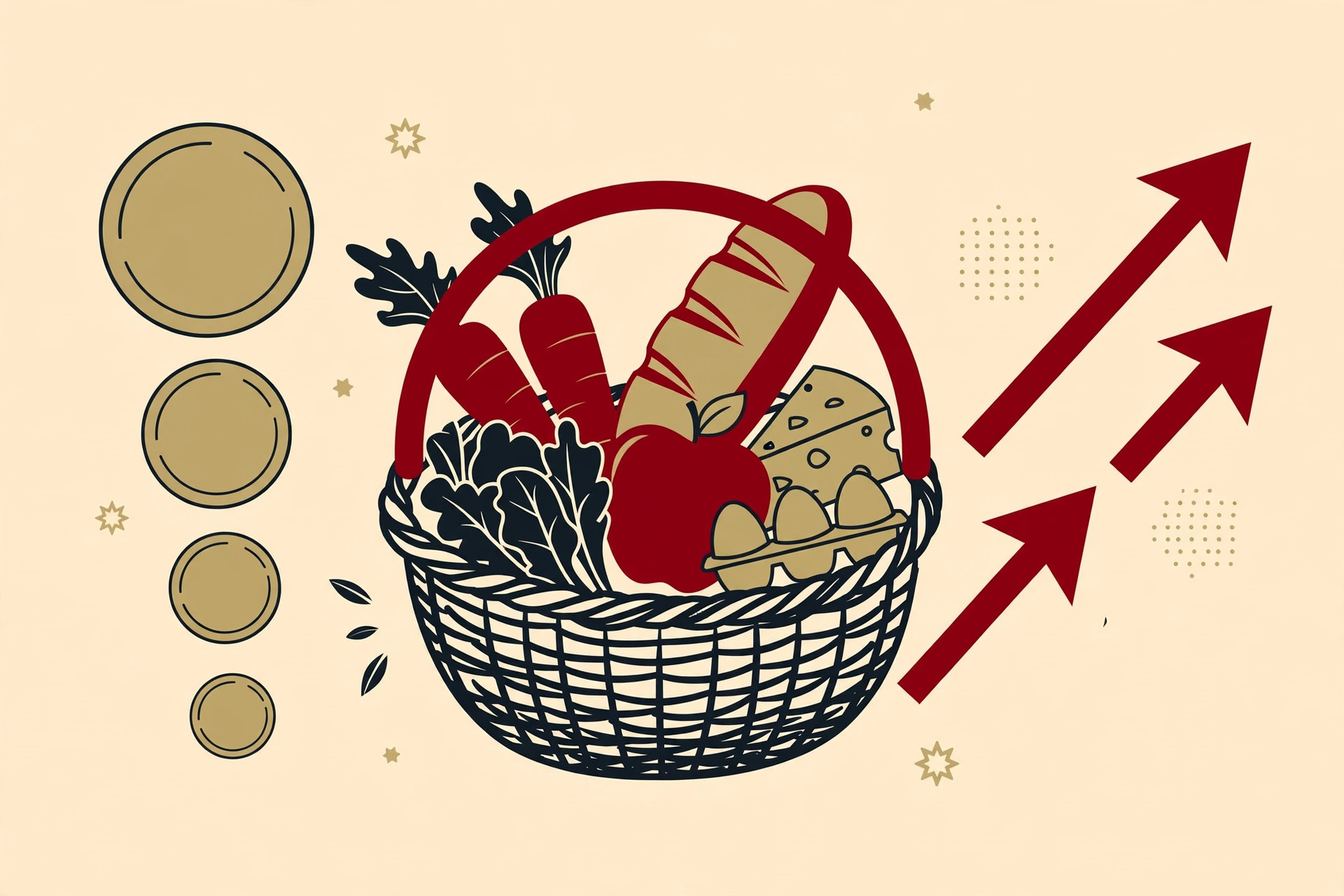
A general rise, not a dearer loaf
Inflation is the rate at which the general level of prices rises, which is the same thing as the buying power of money falling. One price going up is not inflation: if bread gets dearer because of a bad harvest while other prices fall, your money buys roughly what it did. Inflation is when prices rise broadly across the economy, so a unit of currency steadily buys less of everything. The rate is quoted per year: inflation of three percent means the average basket of goods costs three percent more than a year ago, and money sitting still has lost about three percent of its power. It is measured by price indexes, most famously the consumer price index, and calculated as the percentage change in that index.
Why a little is wanted and a lot is feared
Most central banks aim for inflation near two percent, not zero. A gentle rise gives economies lubricant: it lets real wages adjust without anyone's pay being cut in money terms, it rewards spending and investing over hoarding cash, and it keeps a safety margin from deflation, the falling-price trap that encourages everyone to wait and buy later. High inflation is a different animal. It scrambles the signals prices are supposed to send, punishes savers and anyone on a fixed income, rewards borrowers at lenders' expense, and forces people to spend time and effort just keeping up, the famous shoe-leather cost of carrying cash that melts. Above all it is unfair in a random way, redistributing wealth by luck rather than by any decision.
Who gains, who loses, and the real rate
Inflation quietly transfers wealth. Borrowers with fixed-rate debts gain, because they repay in cheaper money; that includes most governments, which is why some are tempted by it. Savers in cash and holders of fixed-interest bonds lose, unless their interest rate outruns prices. The number that decides winners and losers is the real interest rate: the nominal rate minus inflation, or exactly, by the Fisher equation, the ratio of the two growth factors. Workers whose pay rises slower than prices take a real pay cut even while their wage packet grows. Understanding inflation is therefore not an academic extra. It is the difference between reading your own payslip, savings account and mortgage correctly or being fooled by all three, which is why this site gives it a full family of calculators.