What Is GDP and Why Does It Matter?
What GDP actually counts
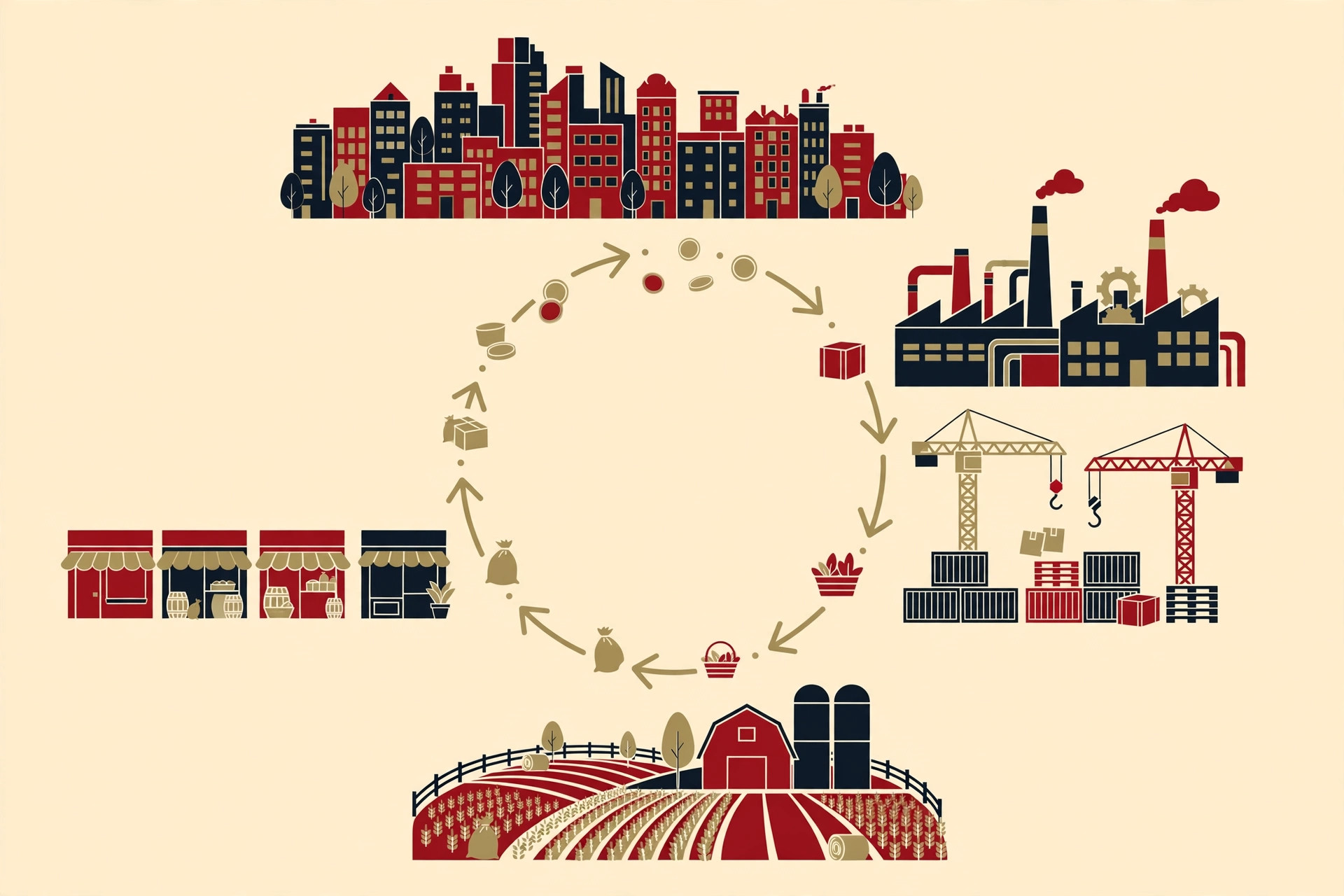
GDP, gross domestic product, is the total money value of everything final that an economy produces in a period, usually a quarter or a year. Final is the key word: a tyre sold to a car maker is not counted separately, because its value is already inside the price of the car. Count it twice and the economy would look bigger than it is. Statisticians add up spending by households, investment by firms, spending by government, and exports minus imports. The four parts must give the same answer as adding up all incomes or all production, which is why GDP is checked from three directions. It is best thought of as the economy's speedometer: a single dial summarising millions of separate activities. Every quarter, statistical offices publish the figure with a lag of weeks, and financial markets move within seconds of the release, which tells you how much weight this single dial carries.
Why everyone watches it
GDP matters because so much hangs on its direction. When GDP grows, jobs are usually easier to find, tax receipts rise without any rate going up, and governments can borrow more cheaply because lenders trust growing economies to repay. When it shrinks for two quarters in a row, newspapers call it a recession, and central banks and finance ministries reach for their tools. Share prices, exchange rates and election results all move with GDP news, sometimes within minutes of a release. A change of half a percent, which sounds like nothing, can mean billions in output and tens of thousands of jobs. That is why the growth calculator on this site exists: the percentage is small, the consequences are not.
What GDP leaves out
GDP is a measure of production, not of wellbeing, and the gaps are famous. It counts the cleanup after an oil spill as a plus and says nothing about the damage. It ignores unpaid work, so a parent caring for children adds nothing while a paid nursery adds plenty. It says nothing about how income is shared: GDP per person can rise while most people feel poorer, if the gains gather at the top. It also misses the informal economy, which is huge in poorer countries. None of this makes GDP useless. It makes it one number among several, best read alongside employment, incomes and prices, which is exactly how the other guides on this site treat it.