What Is Fiscal Policy? Governments, Tax and Spending
The budget as an economic instrument
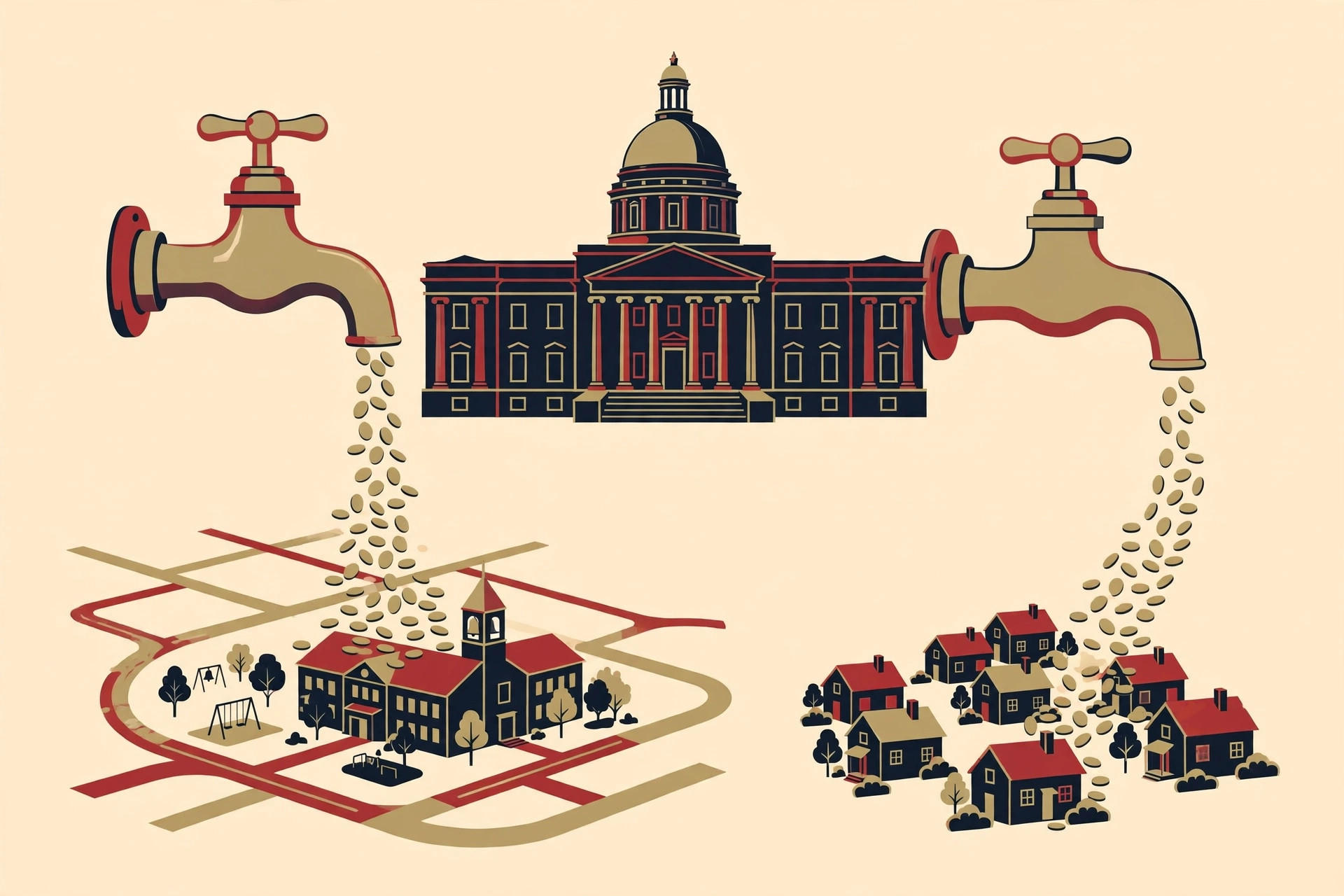
Fiscal policy is the use of government spending, taxation and borrowing to influence the economy. Every budget does this whether it intends to or not: a government that employs millions, builds infrastructure and pays pensions is a giant participant in demand, and changing its tax or spending plans pushes the whole economy around. In recessions, the standard prescription is to spend more or tax less, borrowing the difference, to replace the private demand that has vanished. In booms, the mirror prescription is to pull back, run smaller deficits or surpluses, and let the private sector have the room. Between the two stands the automatic stabiliser, the part of fiscal policy that needs no decision: in a downturn, tax receipts fall and benefit payments rise on their own, cushioning incomes automatically.
Multipliers and the size of the push
How much growth a unit of spending buys depends on the multiplier, the idea at the heart of this site's spending multiplier calculator. Money spent becomes income for someone, who spends most of it again, and the ripple continues, leaking at each round into saving, taxes and imports. Where households are stretched and spend nearly everything, multipliers are large; where spending leaks abroad or is saved, they shrink. Tax cuts multiply less than direct spending, because part of any cut is saved before the ripple even starts. These are not academic niceties: they decide whether a stimulus package is sized in billions or tens of billions, and they are fought over by serious economists because the honest answer is that multipliers vary with the state of the economy, large in slumps, small near capacity.
The bill: debt, interest and limits
Borrowing is not free money; it is spending moved in time, serviced by future taxes. The sustainability question is a ratio, not an absolute: debt relative to GDP, and whether growth outruns the interest rate on the debt. When growth exceeds the interest rate, a government can run modest deficits forever while its debt ratio shrinks, one of the few genuine free lunches in economics. When interest rates exceed growth for long, the arithmetic turns hostile and stabilising the ratio demands surpluses. Politics adds its own bias: deficits are popular in the year they are run and their costs are diffuse and delayed, which is why many countries bind themselves with fiscal rules, independent forecasters and debt ceilings. The arguments are never settled, but the arithmetic in the national debt guide nearby always applies.
Run the numbers yourself
The free calculator that goes with this guide:
Calculate a spending multiplier