What Causes Inflation? Demand, Costs and Money
Demand-pull: too much spending chasing too few goods
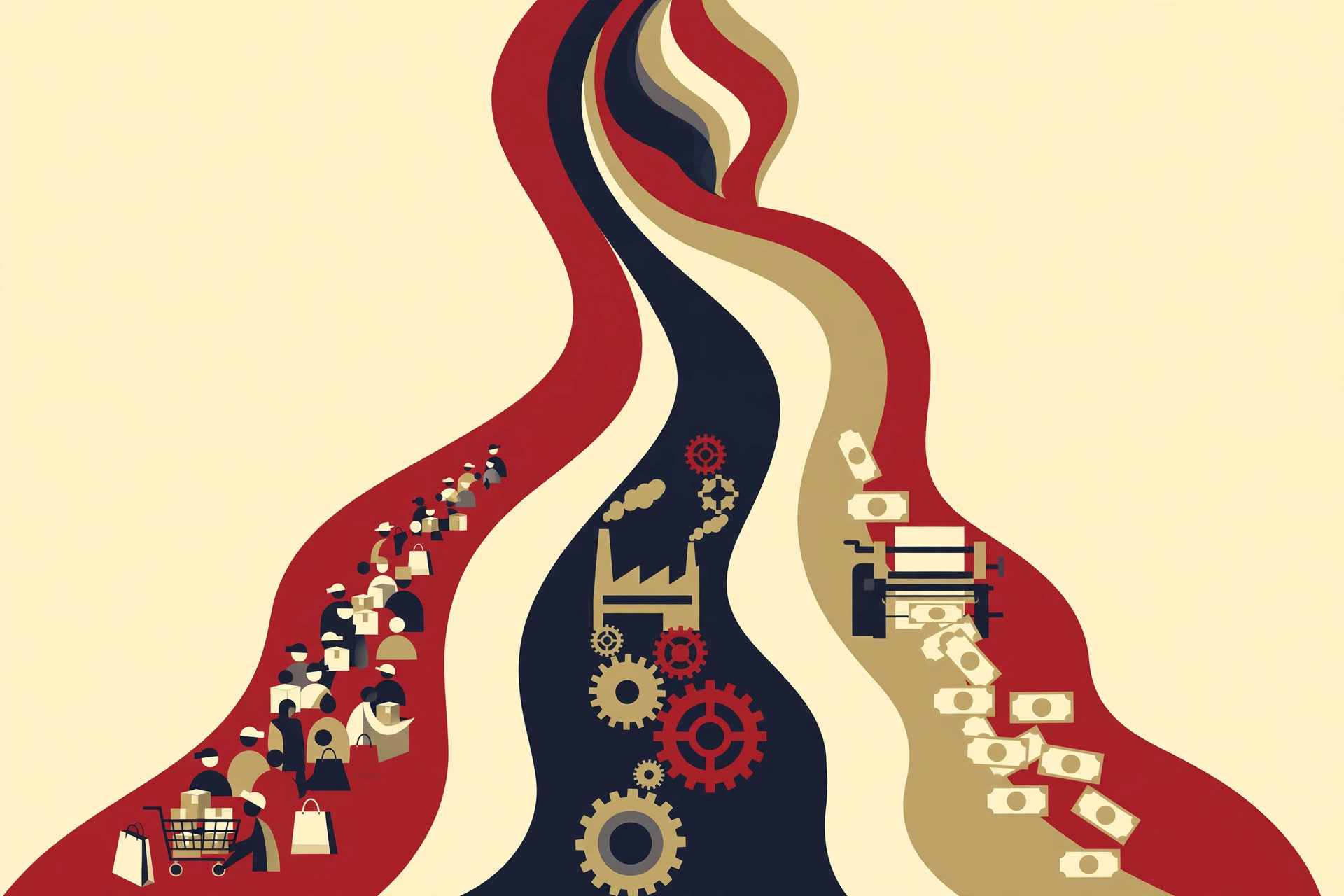
The first engine is demand. When households, firms and governments try to buy more than the economy can produce at current prices, sellers raise prices rather than turn customers away, and wages get bid up as employers compete for scarce workers. This is demand-pull inflation, and it typically appears when unemployment is low, credit is cheap and confidence is high. The cure implied by the diagnosis is to cool demand: higher interest rates, tighter budgets, or simply time for supply to catch up. Demand-pull inflation is the kind central banks feel most justified in fighting, because it signals an economy running hotter than its capacity. The tell-tale sign is that it arrives with strong growth and a tight jobs market, prosperity and rising prices holding hands.
Cost-push: when making things gets dearer
The second engine is supply. If oil, grain, shipping or wages become more expensive, firms face a choice between thinner margins and higher prices, and enough of them choose prices to lift the whole index. This is cost-push inflation, and the 1970s oil shocks are its textbook example. It is crueller than the demand kind because it can arrive with a weak economy, giving the miserable combination called stagflation. A central bank raising rates cannot make oil cheaper; it can only crush demand until something gives. Cost shocks often fade on their own as supply adjusts, which is why central bankers talk about looking through temporary spikes, a judgement call that looks wise when it works and foolish when the shock sets off a wage-price spiral instead.
The monetary thread through both
Behind most long inflations sits money and credit growing faster than the goods they chase. The quantity theory compresses this into an identity: money times velocity equals prices times output. If the money supply grows much faster than real output for years, the price level absorbs the difference sooner or later. Expectations are the transmission belt: once workers and firms expect inflation, they build it into wage claims and price lists, and inflation becomes self-fulfilling even after the original cause fades. That is why central banks guard their credibility so jealously. In practice the three engines run together: a supply shock lights the fire, demand decides whether it spreads, and expectations decide whether it keeps burning. Diagnosing which engine dominates is the first skill of inflation watching.