National Debt Explained: When Borrowing Matters
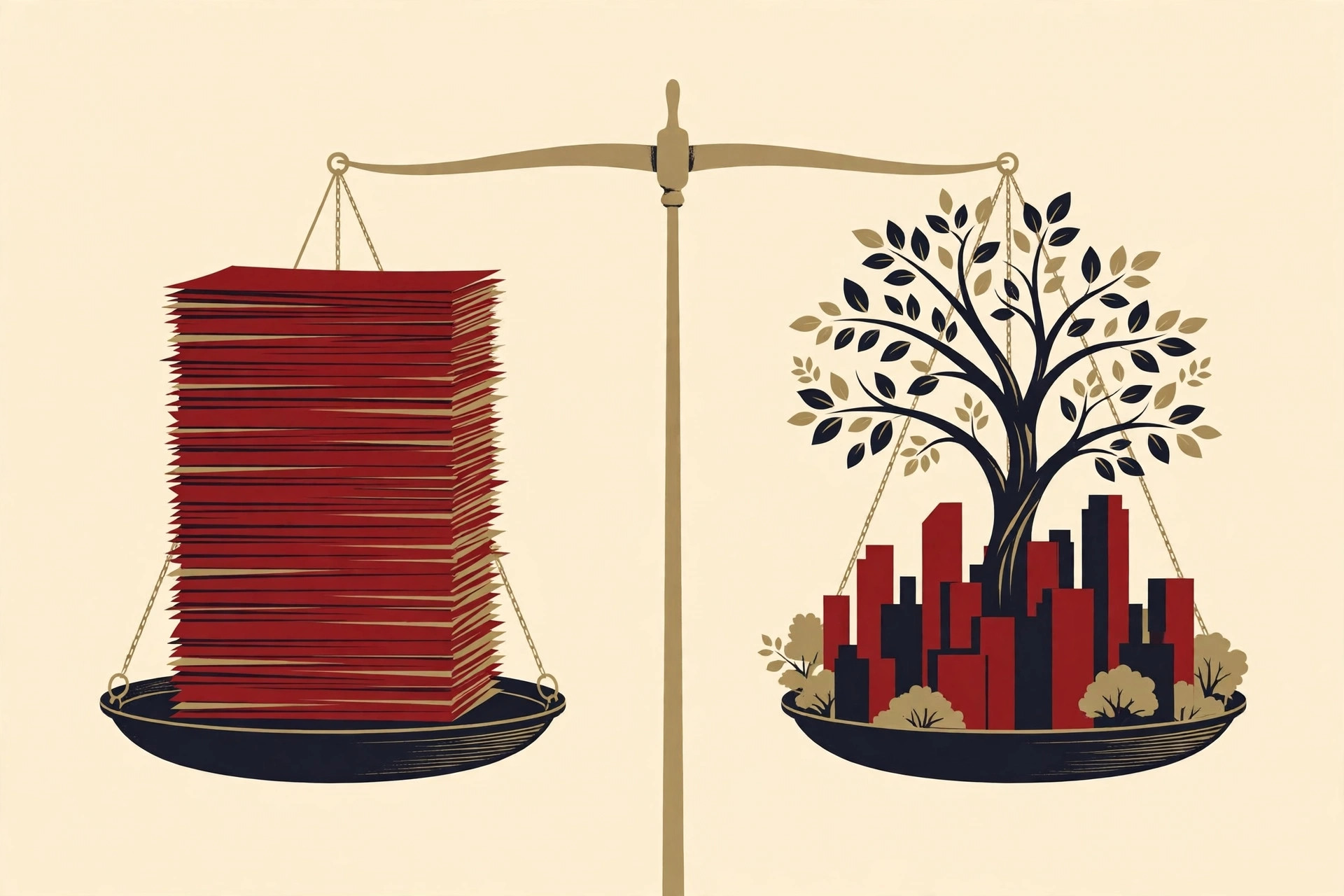
Debt is a ratio before it is a number
Headlines quote national debt in trillions, a number designed to frighten and useless for thinking. Economists divide by GDP: a debt of 100 percent of GDP means the state owes one full year of the economy's output. Japan has carried ratios above 200 percent without crisis; other countries have defaulted below 60. The difference lies in who holds the debt, in what currency, at what interest rate, and under whose law. Debt owed to your own citizens in your own currency, refinanced over decades, is a different creature from debt owed abroad in dollars at short notice. The first question about any national debt is therefore not how big, but of what kind. The second is where the ratio is heading, because sustainability is a direction of travel, not a snapshot.
The snowball: growth versus interest
A debt ratio obeys a simple dynamic. It rises with the deficit and with the gap between the interest rate on the debt and the growth rate of the economy; it falls when growth outruns interest. If an economy grows at four percent and borrows at two, the ratio melts away even with modest deficits, the snowball rolling downhill. Reverse the two numbers and the snowball rolls uphill: the state must run surpluses just to stand still, and austerity itself can worsen the ratio by shrinking the GDP in the denominator, the trap several European countries met after 2010. This arithmetic, not ideology, is why economists watch the difference between the interest rate and the growth rate like a vital sign. It is also why inflation, which raises nominal growth, quietly erodes debt ratios while savers pay the price.
What actually breaks, and what does not
Countries with their own currency rarely default in the textbook way; the risks arrive instead as inflation, financial repression, or a slow squeeze in which interest payments eat the budget line by line until schools and hospitals compete with bondholders. Interest is now one of the largest items in several major budgets, larger than defence in the United States. The real constraint on borrowing is not a magic ratio but the willingness of lenders to keep refinancing at tolerable rates, a confidence that can evaporate quickly, as Britain discovered in the autumn of 2022 when a single budget repriced its debt in days. The sober position is boring and correct: debt is a tool with a carrying cost, safe in proportion to growth, credibility and time, dangerous when any of the three runs out.
Run the numbers yourself
The free calculator that goes with this guide:
See how spending and growth interact