How Central Banks Work: The Bank Behind the Banks
Three jobs in one building
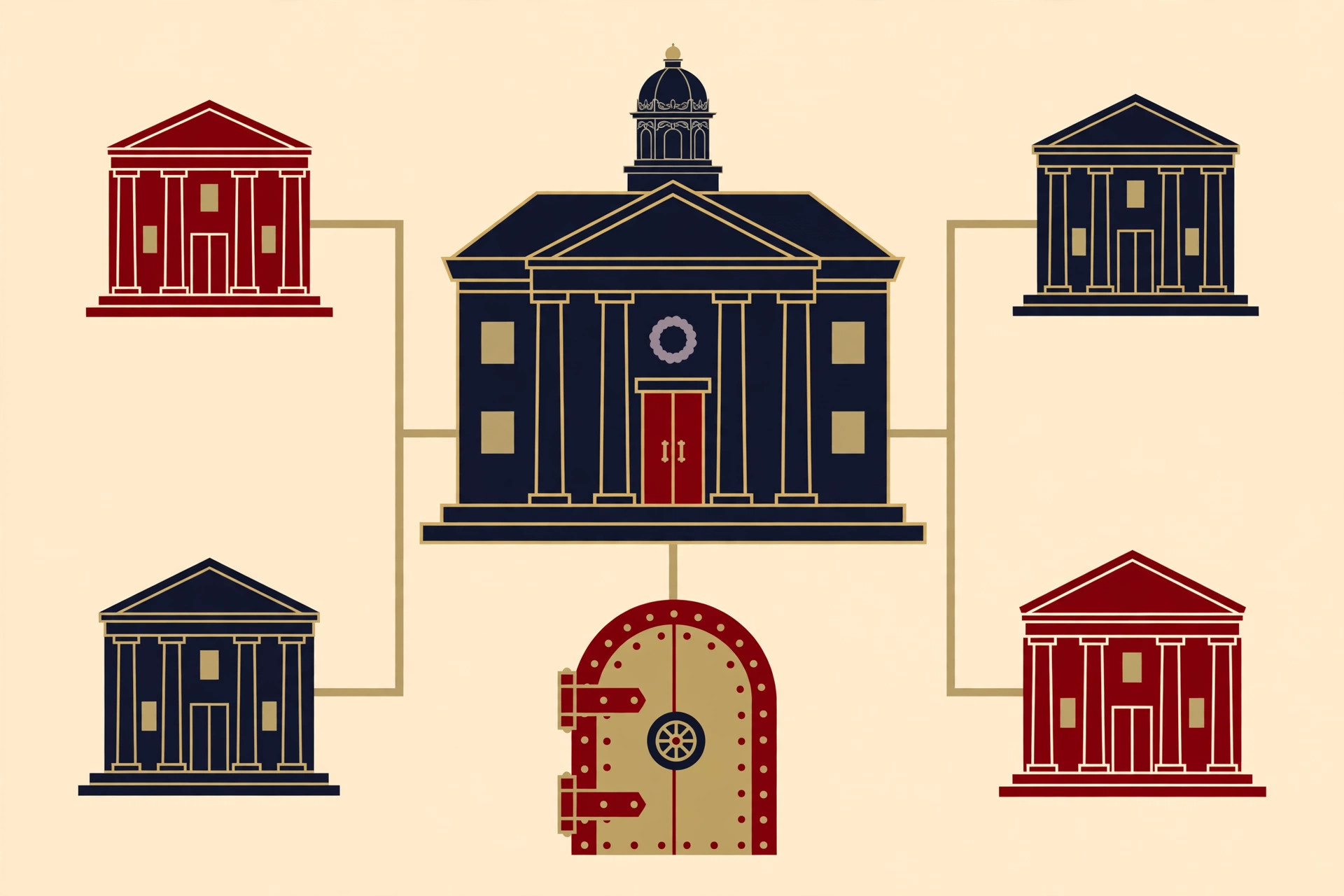
A central bank does three things no other institution can. It issues the nation's base money, the notes in circulation and the reserves banks hold. It acts as lender of last resort, lending freely to solvent banks in a panic when no one else will, a doctrine set down in the nineteenth century and used in every crisis since. And it runs monetary policy, setting interest rates to steer inflation toward its target. Many also supervise banks and run the payment plumbing underneath every card tap and transfer. The combination is potent: the institution that creates money also decides its price. That is why its governance, who appoints the governors, what target it serves, how it explains itself, is a constitutional question dressed as an economic one.
Why independence, and what it costs
Modern central banks are deliberately insulated from day-to-day politics: governments set the goal, usually an inflation target, and the bank chooses the instruments. The evidence behind the design is strong; countries with more independent central banks have historically run lower inflation without worse growth, because markets believe promises made by institutions that cannot be leaned on before an election. Independence has limits and critics. Unelected officials wielding power over mortgages invites a democratic question, answered with transparency: published minutes, forecasts, press conferences and parliamentary hearings. The arrangement also fails gracefully in true emergencies, when treasuries and central banks coordinate openly, as in wars and pandemics. The credibility bought in quiet times is precisely what makes such emergency money creation survivable without igniting the hyperinflation described in another guide on this site.
The central bank in a crisis, and after
In calm years a central bank is a committee adjusting a rate by fractions. In a crisis it becomes the fire brigade of the financial system: lending against collateral nobody else will take, buying assets to keep markets functioning, and inventing facilities over a weekend. The balance sheet, normally a dull document, becomes the story: its size measures how much of the financial system the bank has effectively underwritten. The day after is harder: unwinding those positions without shaking markets, and resisting the political temptation to keep the cheap money flowing. Understanding this cycle explains much of modern economic news. The building with no customers and no advertising, the one whose governor's face appears whenever rates change, is the closest thing an economy has to a guardian of its money's value.
Run the numbers yourself
The free calculator that goes with this guide:
Run the reserve and multiplier maths