Externalities: When Prices Leave Someone Out
Costs that fall on strangers
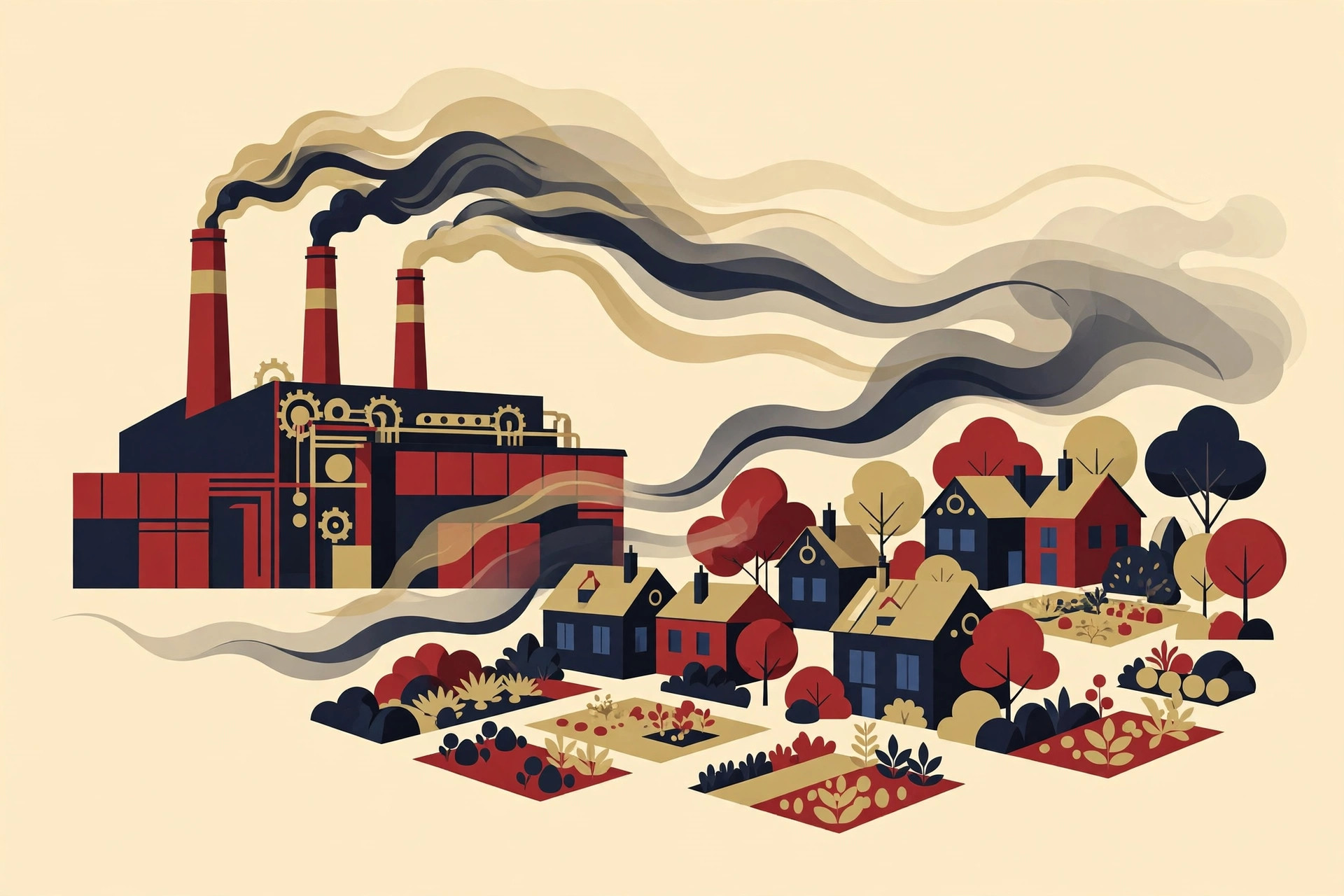
An externality is a cost or benefit of a transaction that lands on people who were not party to it. The factory that sells cheap steel and sends its smoke over the town has pushed part of its true cost onto neighbours' lungs and laundry; the market price of the steel is therefore too low, and too much steel gets made. The beekeeper whose bees pollinate the orchard next door creates the opposite case: a benefit nobody pays for, so too few hives get kept. Externalities matter because the price system, economics' great coordinator, only coordinates what is priced. Where costs or benefits escape prices, the invisible hand fumbles, and the surplus analysis from earlier guides shows the result: quantities settle where private cost meets demand, not where the full social cost does, and the gap between the two is pure loss.
The menu of fixes, from taxes to rights
The classic repair is a Pigouvian tax: charge the polluter the value of the damage per unit, and the private cost climbs to meet the social cost, restoring the right quantity with the price system doing the work. Carbon pricing is this idea at planetary scale. Subsidies play the same role in reverse for benefits like vaccination and research. Regulation takes the direct route, capping quantities or mandating technologies, cruder but sometimes surer where damages are catastrophic or hard to price. The economist Ronald Coase added a famous complication: if property rights are clear and bargaining is cheap, the affected parties can negotiate the efficient outcome themselves, whichever side holds the right, making the initial allocation a question of fairness rather than efficiency. Real pollution fails his conditions, millions of strangers cannot bargain with one factory, which is why the tax and regulation routes dominate practice.
Why externalities run the modern agenda
Scan the live questions of economic policy and externalities stare back from most of them: carbon and climate, congestion, antibiotic resistance, financial risk imposed on taxpayers by banks too big to fail, the attention costs of social media, the herd immunity of vaccination. Each is a case of prices omitting consequences, and each policy fight is about the size of the omission and who should pay to close it. The concept also disciplines enthusiasm: a claimed externality must name the strangers harmed and the channel of harm, or it is merely a preference in costume. Mastering this one idea converts a citizen from a spectator of policy arguments into an auditor of them, because the same three questions always apply. What is the side effect, who bears it, and does the proposed fix make the decision-maker face it at the margin where decisions are made?
Run the numbers yourself
The free calculator that goes with this guide:
See the gains prices do capture