Economic Growth Explained: How Countries Get Richer
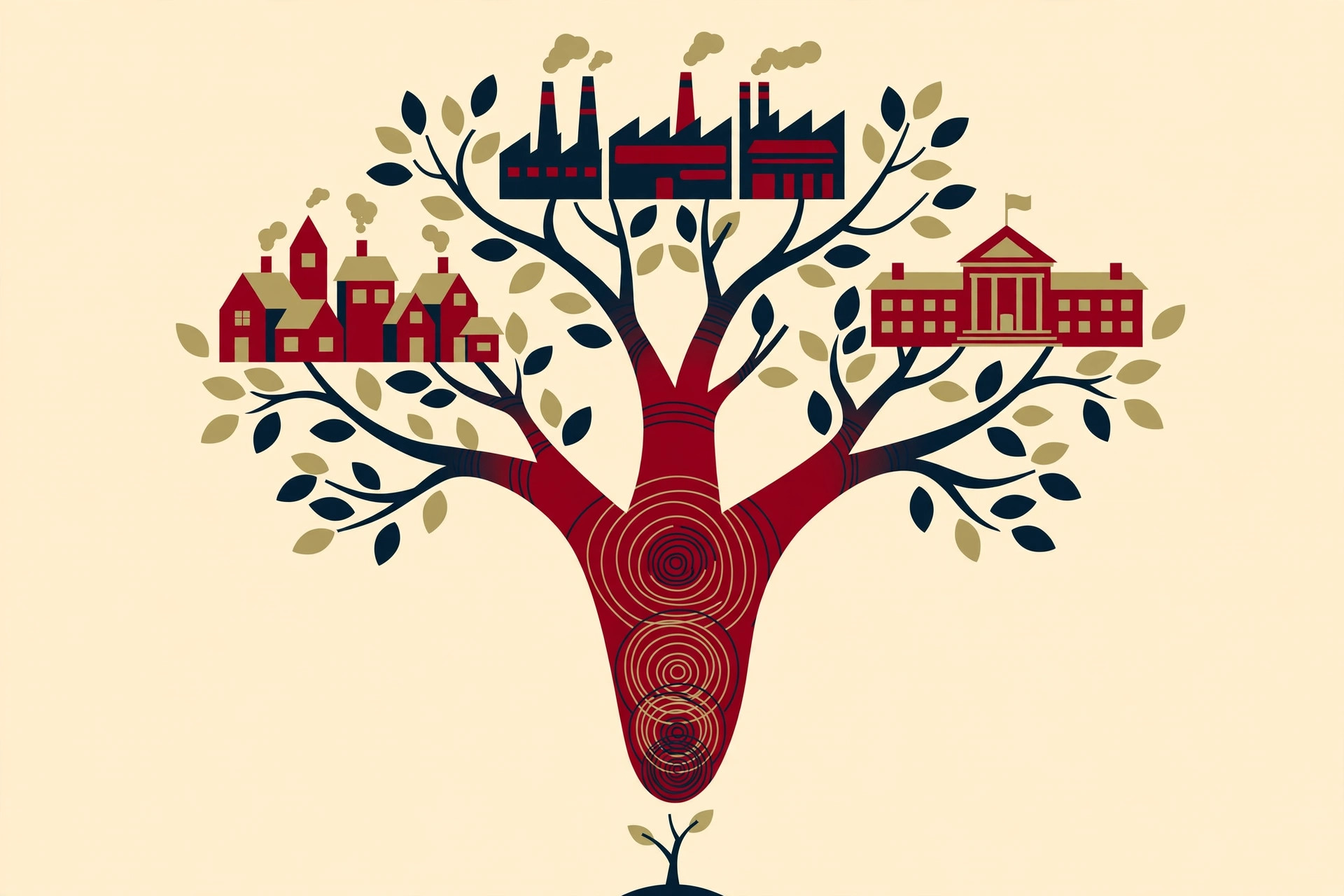
The miracle of compounding
An economy growing at two percent a year doubles in about thirty-five years; at seven percent, in about ten, as the doubling time calculator on this site shows. That arithmetic is the whole story of modern prosperity. Sustained growth at rates that sound trivial transformed poor agrarian societies into rich ones within living memory: South Korea, poorer than much of Africa in 1960, grew near seven percent for decades and joined the rich world. The rule of 70 turns the abstraction into intuition: divide 70 by the growth rate and you have the doubling time, the period over which living standards, tax bases and fiscal room all multiply. It also explains why economists obsess over tenths of a percent. The difference between 1.5 and 2 percent growth, compounded over a working life, is the difference between a generation modestly and dramatically better off than its parents.
Where growth comes from
Output grows when an economy gets more inputs or uses them better. The inputs are labour, which grows with population and participation, and capital: machines, buildings, infrastructure and software, accumulated by investment. The better use is productivity, the output squeezed from each worker and machine, driven by technology, education, organisation and the quality of institutions. Accounting exercises that split growth into these parts find that the richest story is productivity: capital alone runs into diminishing returns, each extra machine adding less than the one before, which is why poor countries can grow fast by copying and investing, then slow as they approach the frontier and must innovate instead. Ideas are the only input that does not run out, and the only one that spreads without being used up, which is why growth theory ends up being about knowledge and the rules that encourage it.
Growth's discontents, honestly faced
Growth is not the same as wellbeing, and the GDP guide on this site lists the omissions: distribution, unpaid work, environmental damage. A growth model that liquidates forests and aquifers books the sales and not the loss. Yet the anti-growth conclusion does not follow easily. Poor countries need growth the way patients need medicine: it funds sanitation, schooling and medicine itself, and every rich country's environmental cleanup was paid for out of a grown economy. The live argument is about composition and measurement: growing the right things, pricing the damage, and watching wider dashboards alongside GDP per capita. What no serious position can deny is the compounding: over generations, growth rates are destiny. A society choosing policies that shave its trend growth for short-term comfort is spending its grandchildren's income, whether or not the transaction appears in any budget.