Deflation Explained: When Falling Prices Hurt
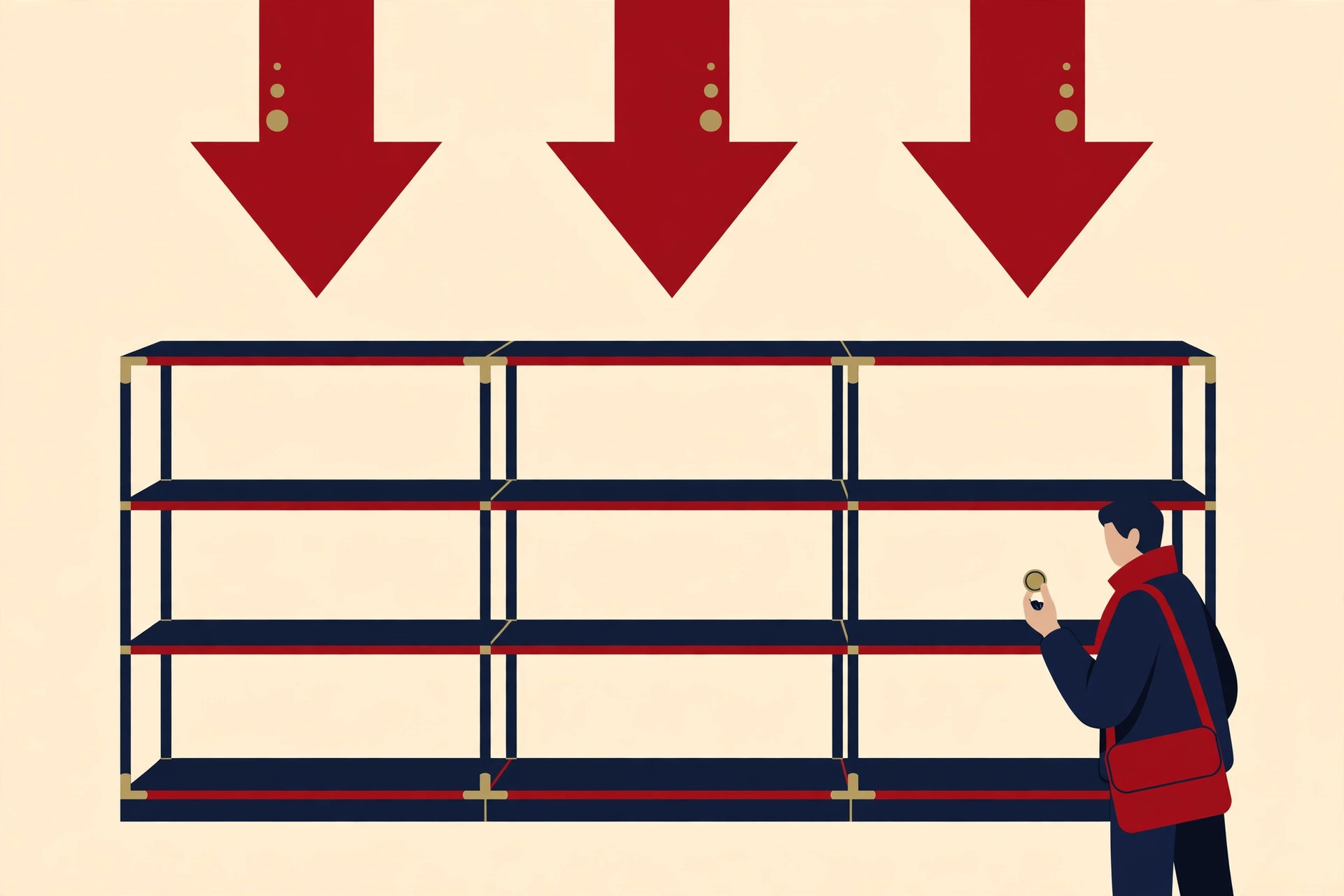
Cheaper tomorrow, so why buy today?
Deflation is a sustained fall in the general price level, the mirror image of inflation. A single cheap season is not deflation; the danger begins when falling prices become the expectation. If you believe a car, a sofa or a house will cost less next year, waiting is rational, and millions of people making the same rational choice drain demand from the economy today. Shops then cut prices to shift stock, which confirms the expectation and starts the loop again. This is the deflationary spiral, and it is far harder to escape than ordinary inflation, because the main tool against it, cutting interest rates, runs into a floor at zero. Japan's long experience from the 1990s onward is the modern case study: mild deflation, year after year, alongside stubborn economic stagnation.
The debt problem nobody sees coming
Deflation quietly raises the real burden of every debt. A loan is fixed in money terms, so when prices and wages fall, the same repayment eats a larger share of income. Households cut spending to service debts, firms postpone investment, and some borrowers default, which wounds the banks that lent to them. The economist Irving Fisher described this debt-deflation chain during the Great Depression, when falling prices helped turn a crash into a decade of misery. It is the deepest reason central banks target inflation of about two percent rather than zero: the target is a safety buffer, keeping the economy a clear distance from the zone where debts grow heavier by themselves. Seen this way, a little inflation is not carelessness. It is insurance bought deliberately, at a known and modest price.
Good deflation and bad deflation
Not every falling price is a threat. When prices fall because supply improves, as with electronics getting cheaper and better for decades, incomes stretch further and living standards rise; economists call this benign or supply-side deflation, and nobody sensible wants to stop it. The malign kind comes from collapsing demand: incomes fall, spending falls, prices follow, and debts swell in real terms. The test is what happens to incomes and jobs alongside the prices. Falling prices with rising output and full employment are progress. Falling prices with rising unemployment and failing firms are a warning siren. The inflation calculator on this site works in both directions: enter a lower index after a higher one and the negative rate it returns is deflation, measured the same way, feared for different reasons.
Run the numbers yourself
The free calculator that goes with this guide:
Calculate a price change, up or down